
Flamehaven frameworks
Methods, systems, and review engines behind the work.
Frameworks is the methods layer for Flamehaven. It maps the systems used to review AI risk, verify reasoning, inspect scientific trust surfaces, and package technical evidence. Case Notes is the proof layer beneath it.
Control, auditability, and safe boundaries
AI Governance Systems
This track focuses on the layers that make AI behavior inspectable before it reaches production: policy boundaries, fail-closed gates, and governance logic that can survive legal, operational, or safety review.
Representative Review Visual
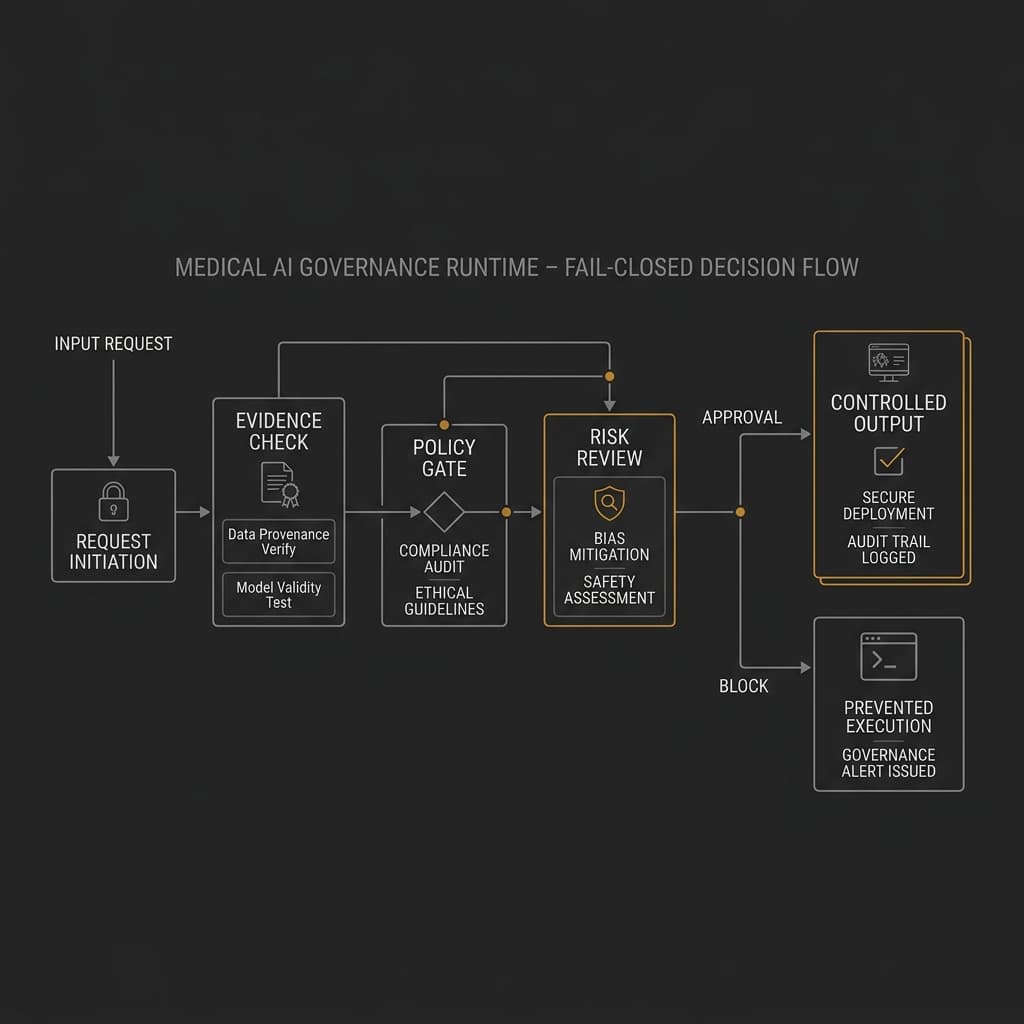
The goal is not to add superficial compliance language after a model is already wired into your workflow. The goal is to define where the system may act, when it must stop, and what evidence exists for those decisions.
Flamehaven uses governance as a systems problem: constraints, audit trails, review surfaces, and runtime behavior should align. If they do not, the architecture is still fragile even if the demo looks polished.
Related Case Notes
CCGE: Fail-Closed Governance Engine
Fail-closed governance engine for healthcare AI systems, ensuring deterministic boundaries around probabilistic models.
AI-SLOP-Detector
A long-running code review and anti-slop inspection system designed to surface low-integrity patterns before they harden into production debt.
Flamehaven-Tensor-Canon
Universal Data Governance Engine ∴ Enforcing structural covenants and detecting drift (MMD) for PyTorch & NumPy pipelines.
Related Writing
Short writing list focused on governance, safety, and architectural control.
The Two Problems No One Talks About in AI Agent Coding Pipelines
AI agent coding pipelines fail not because models are weak, but because verification is structurally broken. This article identifies four empirically documented failure mechanisms — agreement bias, latent entanglement, echoing, and right-for-wrong-reasons — and proposes a concrete architecture: hash-chained audit records, hybrid recurrence scoring, dynamic context budgets, and evidence-first review across three independent axes. Covers multi-agent pipeline design, agentic code review, blueprint indexing, and P0–P4 governance gates.
The README Was a Protocol. The Entrypoint Was Still Optional.
README-as-Protocol solved explicit invocation at the schema level. It did not solve entry control at the workflow level. This version adds the missing hierarchy: natural, guided, and forced activation.
When Control Becomes Authority: Calibration Governance in STEM BIO-AI 1.7.x
Why STEM BIO-AI treats calibration as governed policy instead of a free-form score-tuning console for bio and medical AI repository audits.
Discuss this framework
If your system maps to this risk surface, start with a direct review. Flamehaven translates these methods into concrete findings, verdicts, and next-step recommendations.
Inference quality, validation, and proof surfaces
Reasoning / Verification Engines
This track covers systems that inspect claims, reasoning steps, and structural integrity. The emphasis is not “can the model answer” but “can the system justify, verify, and reject weak output.”
Representative Review Visual
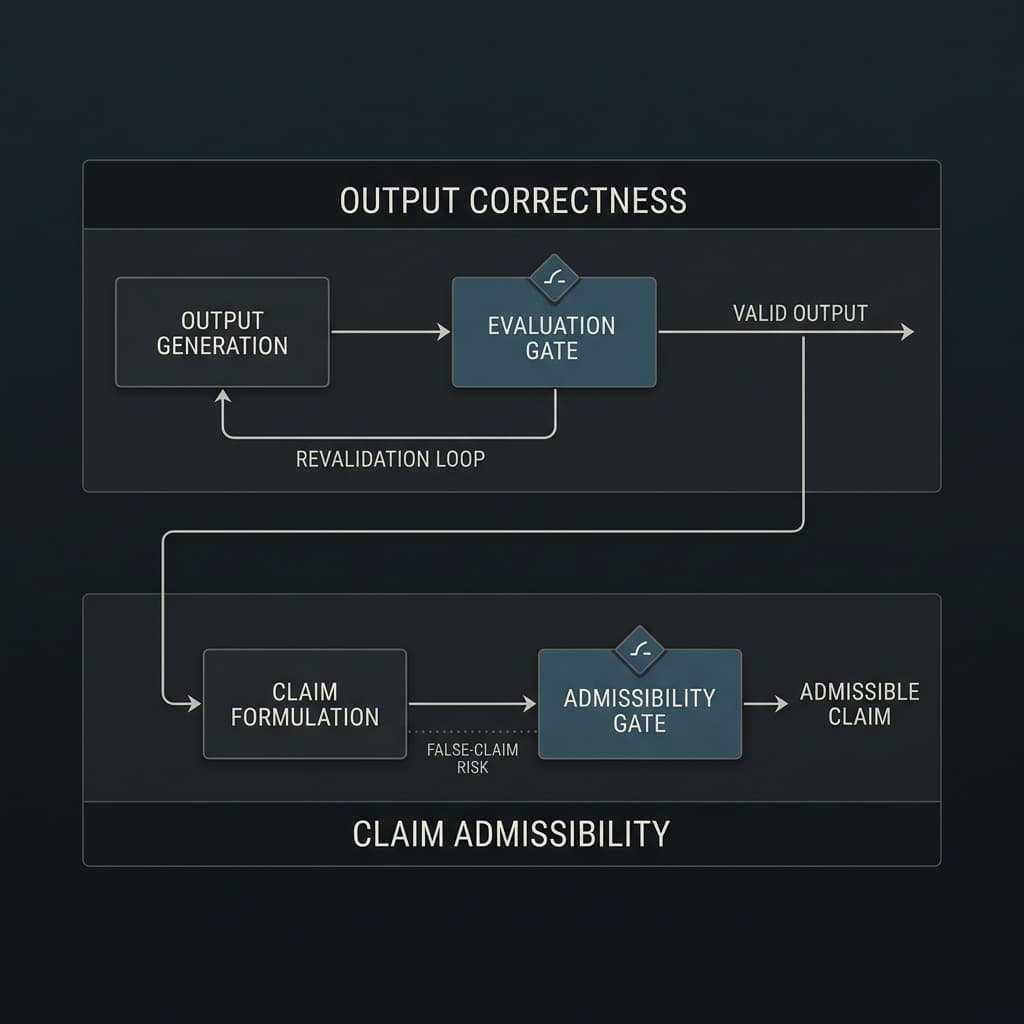
Reasoning infrastructure matters when downstream decisions are expensive, regulated, or irreversible. In those environments, plausible output without verification is just delayed failure.
Flamehaven treats verification as part of the product architecture itself: not a QA afterthought, but a required layer that shapes which outputs are allowed to survive.
Related Case Notes
AI-SLOP-Detector
A long-running code review and anti-slop inspection system designed to surface low-integrity patterns before they harden into production debt.
SPAR-Framework
SPAR (Sovereign Physics Autonomous Review): a deterministic adversarial review layer for mathematical and physics-grade model validation.
ProofCore-AI-Benchmark
ProofCore is a browser-native, 100% offline-first, hybrid mathematical proof verification engine. It combines rigorous symbolic math with semantic understanding to reliably verify mathematical proofs, offering zero ex...
HRPO-X
Hybrid Reasoning Policy Optimization (HRPO): a research prototype for hybrid latent reasoning with RL.
Related Writing
Posts linked to reasoning quality, verification, proof, and evaluation.
Each /slop Is a Calibration Signal — AI-SLOP Detector v3.6.0 and the Claude Code Skill
Every /slop invocation records to a project-scoped history. After 10 re-scanned files, bounded self-calibration adjusts detection weights for your codebase. Here is the mechanism, the data, and what actually shipped in v3.6.0.
AI-SLOP Detector v3.5.0 — Every Claim, Verified Against Source Code
AI-SLOP Detector v3.5.0 made 7 claims on LinkedIn —self-calibration logic, download numbers, defect detection. Here's every claim verified against actual file paths and line numbers. The code speaks for itself.
Can AI Review Physics? Yes — That Is Why We Built SPAR
SPAR is a deterministic framework for claim-aware review: checking whether an output deserves the claim attached to it.
Discuss this framework
If your system maps to this risk surface, start with a direct review. Flamehaven translates these methods into concrete findings, verdicts, and next-step recommendations.
Evidence-aware scientific systems
Scientific & BioAI Infrastructure
This track is for scientific and BioAI environments where reproducibility, validation boundaries, and explicit methodological structure matter more than generic model enthusiasm.
Representative Review Visual
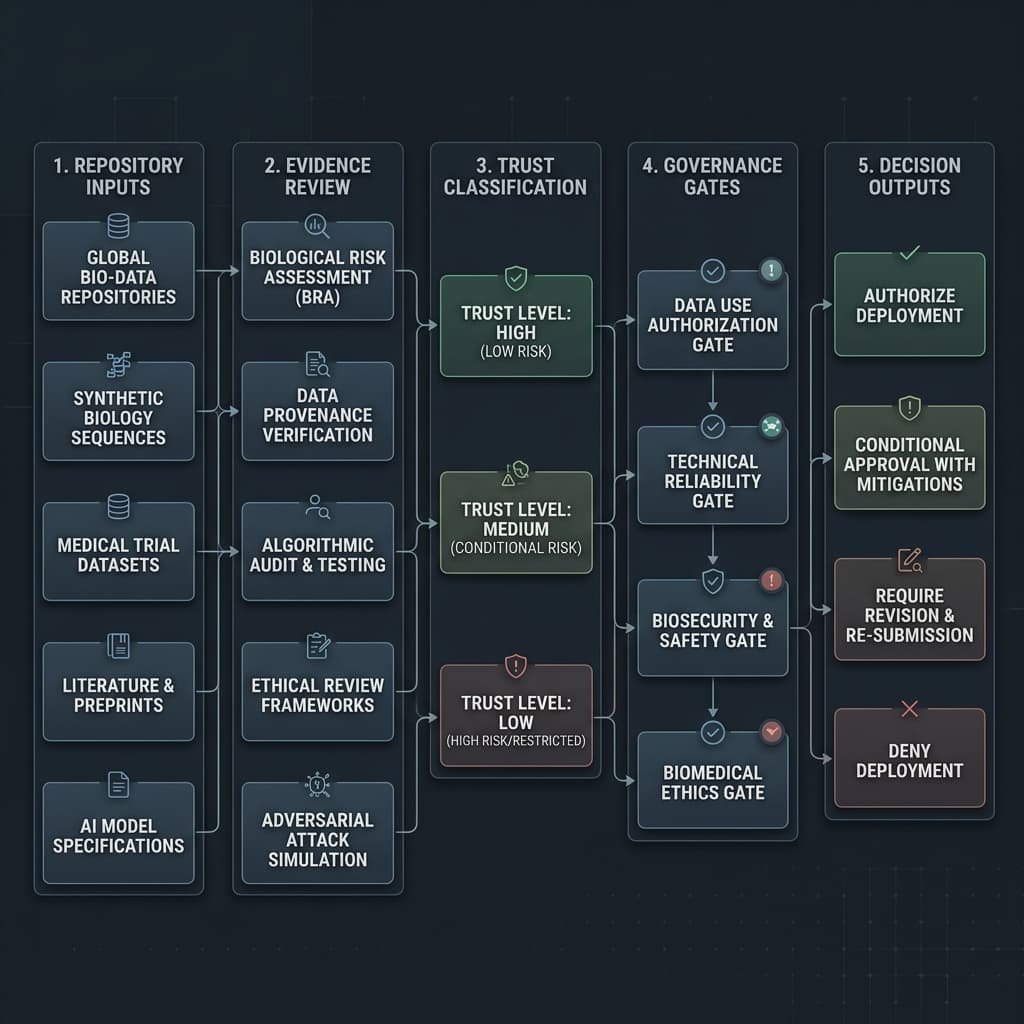
Scientific systems need more than automation. They need traceable assumptions, screened hypotheses, and outputs that can be inspected by technical stakeholders without hand-waving.
Flamehaven approaches BioAI and scientific infrastructure as high-stakes engineering: evidence pathways, reviewable artifacts, and architectures that stay useful when the domain becomes more demanding.
Related Case Notes
RExSyn-Nexus
A governance-aware orchestration framework for AI systems that need structured reasoning, explicit controls, and traceable decision paths.
Flamehaven-TOE
A research-side validation engine for structured hypothesis extraction, experimental framing, and multi-step reasoning review.
ARR-medic-cyp3a4
Research-side CYP3A4 interaction prediction system for pharmacology education, exploratory screening, and BioAI workflow design.
Related Writing
Posts connected to scientific workflows, BioAI, and evidence-bound research systems.
We Built AI Verification Infrastructure. Then It Found Our Blind Spots.
A technical account of the Flamehaven Verification Ledger — what it found, where it failed, and what we need the field to tell us
Stanford. Princeton. A bioRxiv Paper. So Why Did Nobody Ask Where the Data Goes?
BioClaw processes EHR data. Its primary showcase channel is WhatsApp. We audited the repository: 60/100, Tier 2 Caution. Here is what the bioRxiv paper says that the README does not.
Making Equation (2.2) of the OpenAI Erdős Result Executable
Executable reproduction of equation (2.2) from OpenAI’s Erdős unit-distance result, showing how high-precision Python turns a fragile numerical claim into reproducible claim custody.
Discuss this framework
If your system maps to this risk surface, start with a direct review. Flamehaven translates these methods into concrete findings, verdicts, and next-step recommendations.
Operational surfaces that survive real deployment
Cloud & Engineering Foundations
This track covers the engineering foundations that hold everything else up: deployment surfaces, delivery tooling, developer infrastructure, and the production scaffolding that turns concept work into systems teams can operate.
A strong idea still fails if the surrounding engineering is weak. Infrastructure, automation, and delivery logic determine whether the system can be sustained after the initial build.
Flamehaven treats operational foundations as part of the same thesis: architecture should be governable, observable, and practical to evolve under real production pressure.
Related Case Notes
Flamehaven-Filesearch
Self-hosted RAG search engine for private document search, hybrid retrieval, and production deployment in minutes instead of weeks.
copilot-guardian
Autonomous CI/CD recovery tool powered by GitHub Copilot CLI. Analyzes failures with multi-hypothesis reasoning, generates risk-stratified patches (Conservative/Balanced/Aggressive), and auto-applies fixes with full t...
Dir2md
CLI pipeline that converts codebases into structured markdown context for AI-assisted engineering, review, and documentation workflows.
FlashRecord
The fastest Python-first CLI screen recorder ∴ Instant screenshots (@sc) and lightweight GIF recording (@sv) for developer automation. No GUI, just speed.
Related Writing
Posts tied to engineering practice, deployment, and production infrastructure.
When the Memory Gate Met a Real Archive: What 90 Experiments Taught Us About Cheap LLM Slop
How to enforce data integrity against AI-generated slop using MICA. Explore a 11-step session-start validator that locks rules, playbooks, and contracts in code before code is ever touched.
The Meeting Nobody Could Follow -The format of AI output is a design decision. We made it wrong for three years.
How our engineering team stopped sending 200-line Markdown files that nobody read — and what a nine-word post from an Anthropic engineer taught us about AI output format as a design decision. Includes token cost analysis, real prompt templates, and the HTML render layer approach used in production.
The Sheepwave Has a New Shape: OpenMythos and the Rise of Architecture Hype
A technical-opinion essay on OpenMythos, Claude Mythos, README-driven AI hype, and why architecture claims need source-level verification before becoming public belief.
Discuss this framework
If your system maps to this risk surface, start with a direct review. Flamehaven translates these methods into concrete findings, verdicts, and next-step recommendations.
Trend shifts, market movement, and strategic signals
AI Signals & Market Shifts
This track covers meaningful AI market movement, platform shifts, product signals, and operational changes that matter to teams building under real constraints.
The goal is not to repost headlines. The goal is to surface changes that affect architecture, risk posture, product timing, and strategic decision-making.
Flamehaven treats AI signals as decision inputs: market structure, platform behavior, and ecosystem drift all matter when systems need to hold up beyond the current cycle.
Related Case Notes
Related Writing
Posts connected to AI trend shifts, platform movement, and market-relevant signals.
"The Algorithm Did It": How YouTube's Liability Playbook Is Coming for Every Developer
What a platform's war on audio creators tells us about the future of software accountability — and why the craftsman's seal is the only thing that survives.
Crimson Desert and the Innovation Tax
Crimson Desert and the Innovation Tax: an essay on why ambitious systems can look like a 6/10 before their grammar becomes legible — and why AI teams must know what to patch, what to preserve, and how to turn criticism into a map.
The Alchemy of Ego - How AI Turns Unfinished Thought Into Fluent Certainty
A personal essay on how AI can turn unfinished thoughts into fluent certainty, why internal coherence is not external proof, and why falsifiability, failure conditions, and visible execution matter in AI-assisted thinking.
Discuss this framework
If your system maps to this risk surface, start with a direct review. Flamehaven translates these methods into concrete findings, verdicts, and next-step recommendations.